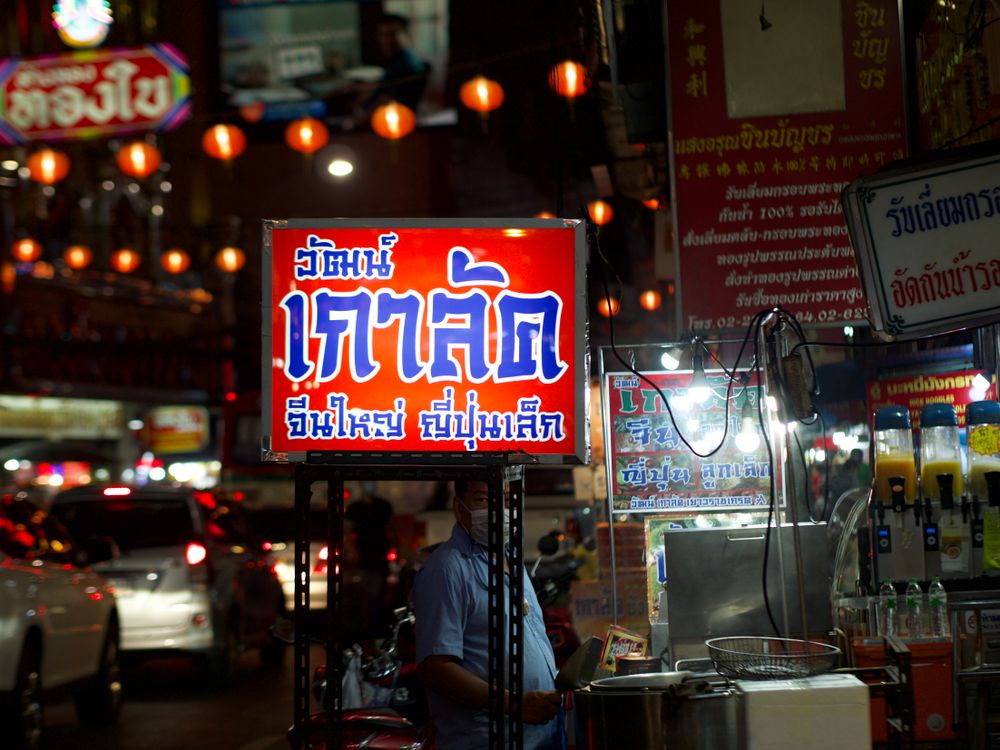
Thai is a tonal language with five tones, which means the same syllable can mean completely different things depending on how you say it. That sounds intimidating, but in practice most Thais will understand what you mean from context, and any attempt at their language goes down extremely well. Even a mangled "khob khun" beats pointing and hoping. One thing to know first: Thai has polite particles added to the end of sentences. Men say krap (sometimes written krub), women say ka. You can attach either to almost any phrase to make it polite. This guide uses krap/ka to show where the particle goes.
The Golden Rule: Krap and Ka
Add krap (men) or ka (women) to the end of any phrase to make it sound respectful. Locals use it constantly. You should too.
Situation
Men say
Women say
Agreeing, saying yes
Krap
Ka
Saying thank you
Khob khun krap
Khob khun ka
Any polite request
...krap
...ka
Basics
English
Thai (romanised)
Sounds like
Hello / Goodbye
Sawadee krap/ka
Sa-wah-dee
Thank you
Khob khun krap/ka
Kob-koon
Sorry / Excuse me
Kho thot krap/ka
Kor-toht
Yes
Chai / Krap / Ka
Chai
No
Mai
My
No thank you / I don't want it
Mai ao krap/ka
My ow
I don't understand
Mai khao jai
My cow jai
Do you speak English?
Phut angrit dai mai?
Poot ang-grit dai my?
At a Restaurant or Bar
English
Thai (romanised)
Water
Nam
Drinking water
Nam plao
Ice
Nam khaeng
No ice
Mai sai nam khaeng
Bill / Check please
Chek bin krap/ka
Delicious
Aroy
Very delicious
Aroy maak
Spicy
Phet
Not spicy
Mai phet
A little spicy
Phet nit noi
No sugar
Mai sai nam tan
Ashtray
Tee khia buri
Menu
Menu (same word)
Can I have...
Kho... krap/ka
Examples:
"Kho nam krap" = Can I have water, please
"Mai phet krap" = Not spicy, please
"Chek bin ka" = Bill please (said by a woman)
Shopping and Prices
English
Thai (romanised)
How much?
Tao rai?
Too expensive
Phaeng pai
Can you lower the price?
Lot noi dai mai?
Cheap
Thuuk
Free
Free (loanword, widely used)
Getting Around
English
Thai (romanised)
Where is the toilet?
Hong nam yuu tee nai?
Toilet / Bathroom
Hong nam
Left
Sai
Right
Kwaa
Straight ahead
Trong pai
Stop here
Yut tee nee
Numbers
Numbers are worth learning. You will use them for prices, ordering quantities, and understanding what you owe.
Number
Thai (romanised)
0
Soon
1
Neung
2
Song
3
Sam
4
See
5
Ha
6
Hok
7
Jet
8
Paet
9
Gao
10
Sip
11
Sip-et
12
Sip-song
20
Yee-sip
21
Yee-sip-et
30
Sam-sip
100
Roi
1,000
Pan
So 350 baht is "sam roi ha-sip baht", and 1,200 baht is "neung pan song roi baht". In practice you can just hold up fingers or show your phone screen and you will be fine.
Food Restrictions
English
Thai (romanised)
I'm vegetarian
Gin jeh / Gin mangsawirat
No meat
Mai sai nuea
No pork
Mai sai muu
No seafood
Mai sai ahaan talay
I'm allergic to...
Phaae...
Peanuts
Tua lisong
Gluten / wheat
Salee
The word jeh (เจ) is what Buddhist vegan food is called in Thailand. Saying "gin jeh" at a street stall is widely understood and means no meat, no fish sauce, no eggs.
Useful Little Words
English
Thai
Very / A lot
Maak
A little
Nit noi
Good
Dee
Not good
Mai dee
Beautiful
Suay
Hot (temperature)
Ron
Cold
Yen
Big
Yai
Small
Lek
Same same
Meuan meuan
A Few Tips
Thai people are generally very patient with foreign attempts at their language. Smiling helps with everything. If you say something and get a confused look, try saying it slightly differently or writing it down to show a local who can help. The tones matter most for words like mai (which can mean "no", "new", "burn", or "silk" depending on tone), but context usually saves you. The word sanuk means fun, enjoyment, or having a good time. It is a core Thai value. If something is sanuk, it is worth doing. Keep that in mind and you will get along fine.
Last updated: 23 May 2026
Work in progress
This site is still being built. Information may be incomplete, inaccurate, or missing entirely. Please do not rely on it to plan your visit.
We are building the most complete and up-to-date guide to Koh Lanta, run by locals and expats who actually live here. No paid placements, no outdated copy-paste content. Our goal is to have every place on the island accurately listed and open for community contributions. We are aiming to be fully ready for the 2026/2027 high season.